Ceramics
4 objects
Clay bodies from stoneware to hard-paste porcelain. What separates them is firing temperature, and what that buys is the wall thickness a form can get away with.
The section opens with a Chinese porcelain that reached England before anyone in Europe could make its body, and closes with a vase drawn for a factory. Between the two the kilns got hotter, which is the whole reason the later walls can be as thin as they are: soft-paste fires low and forgives nothing, hard-paste fires high and holds an edge, stoneware sits between them and outlasts both.
The entries run from factory porcelain to a design drawn for the production line, so the section is also a record of who decided the shape. In the earlier pieces the modeller and the painter are different trades and the painting is the expensive part. In the later ones the drawing is done before the clay is touched, and what the plate shows is a profile that survives being made a thousand times.
Arranged by date rather than by body, because the temperature was climbing.
Narrow by term or decade
Indexed
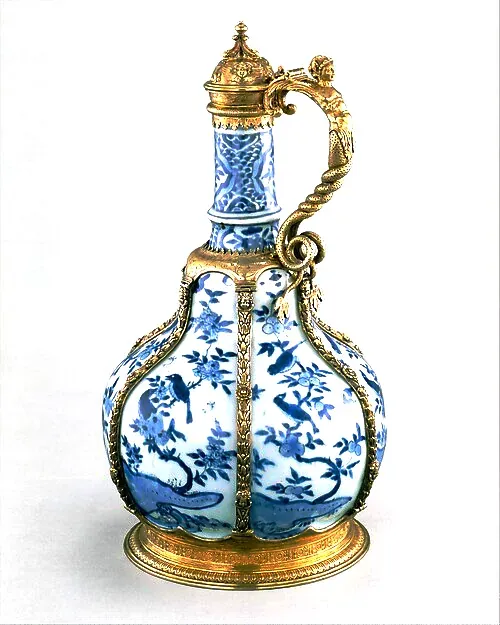
Hard-paste porcelain, gilded silver · ca. 1573–85, mounts ca. 1585 · 03-01
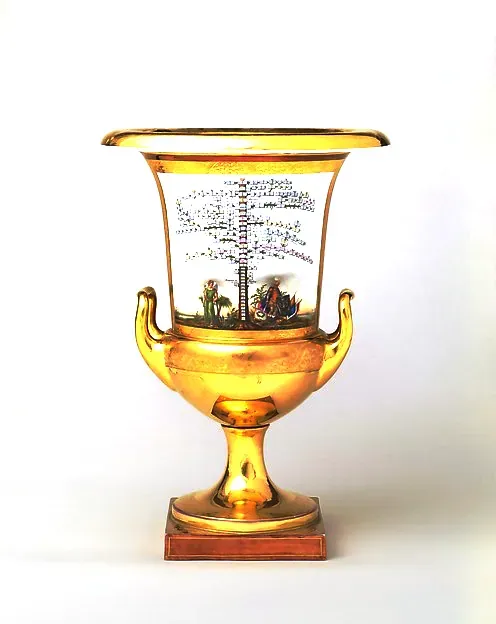
Hard-paste porcelain · 1820–25 · 1993.335
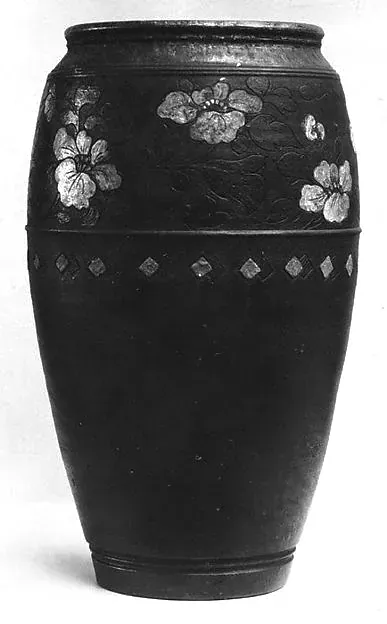
Stoneware, clay, gilt · 1882–86 · 03-03
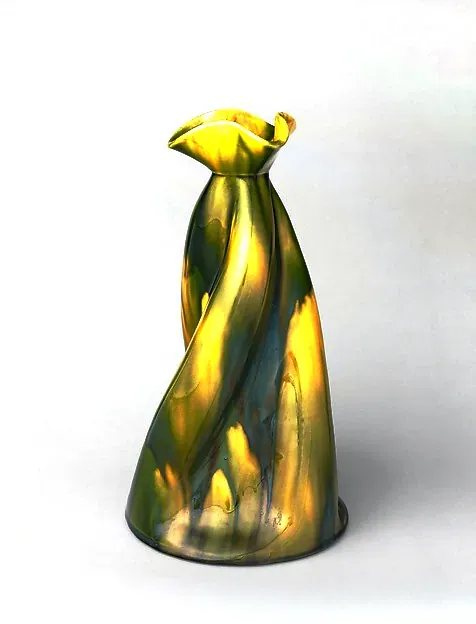
Earthenware · ca. 1893 · 03-04