Clockwork
4 objects
Movements and the cases built to carry them. Filed apart from cabinetwork because the case here is subordinate — the object is dated by its movement, and the case can be, and often was, replaced.
A movement is signed, numbered and dated by its own construction, and it outlives whatever it was first housed in. Cases were replaced when fashion moved, and a catalogue that took its dates from them would date half of this section wrong.1
So the entries lead with the movement. Where the case is remarkable the plate says so in the caption rather than in the date line, and where the object exists to be watched rather than read, as the automata do, the further views carry what one plate cannot hold.
Repeating work is a category of its own within the section. A watch that strikes the hour on demand is a machine built for the dark, and its plate shows a plain gold inner case that nobody was meant to see.
Footnotes
-
A movement and its case can be dated apart. Where the record dates them apart, the date line prints the movement’s and the caption carries the case. ↩
Narrow by term or decade
Indexed
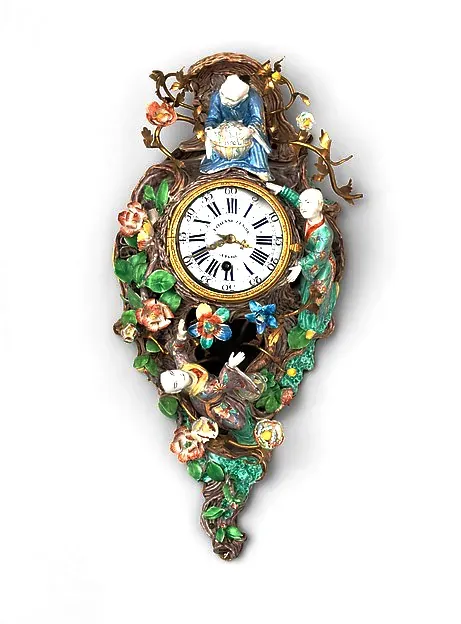
Soft-paste porcelain case, enamel dial, brass and steel movement · ca. 1735–40 · 1982.60.84
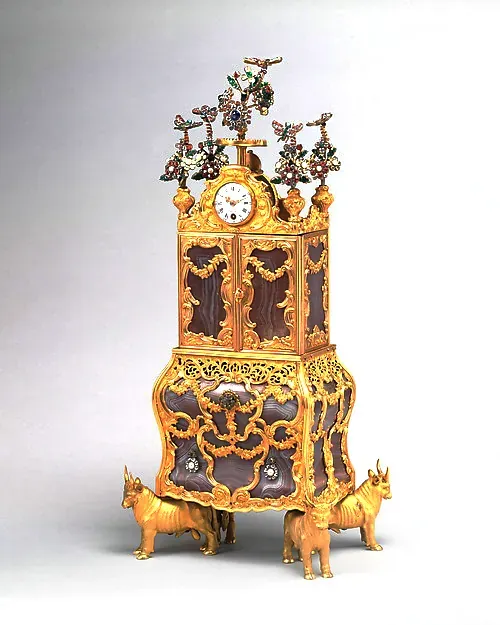
Miniature secretary with a watch
Agate case with gold mounts, pearls; enamel dial · ca. 1766–72 · 05-02
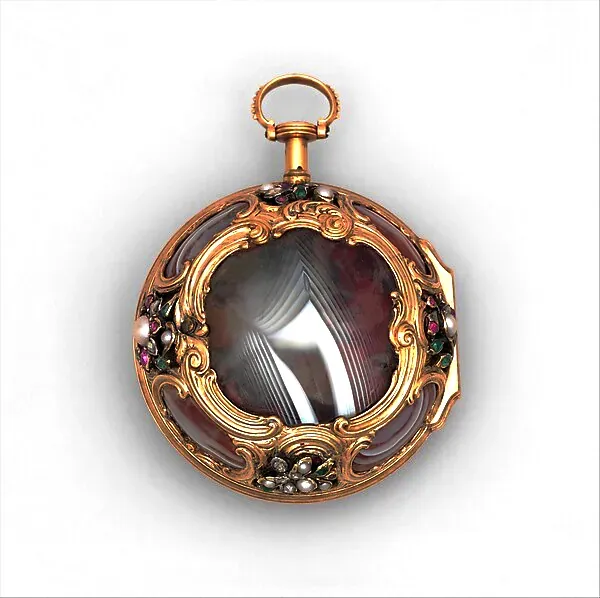
Pair-case quarter-repeating watch
Gold set with diamonds, pearls, emeralds and rubies; enamel dial · ca. 1770–72 · 05-03
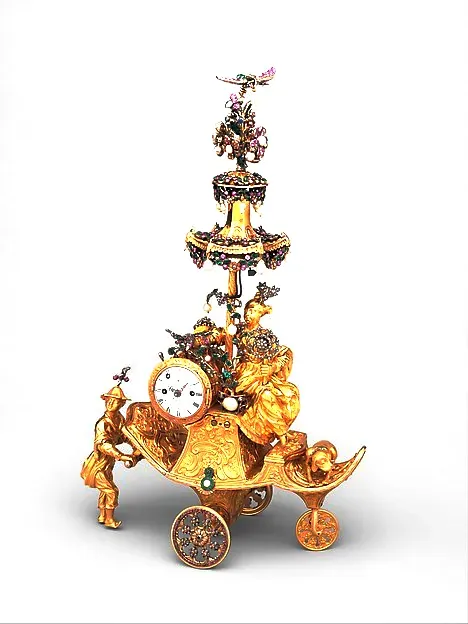
Chariot automaton with a clock
Gold with diamonds and pearls; enamel dial · 1766 · 1982.60.137